Section 1: Survey Response Overview
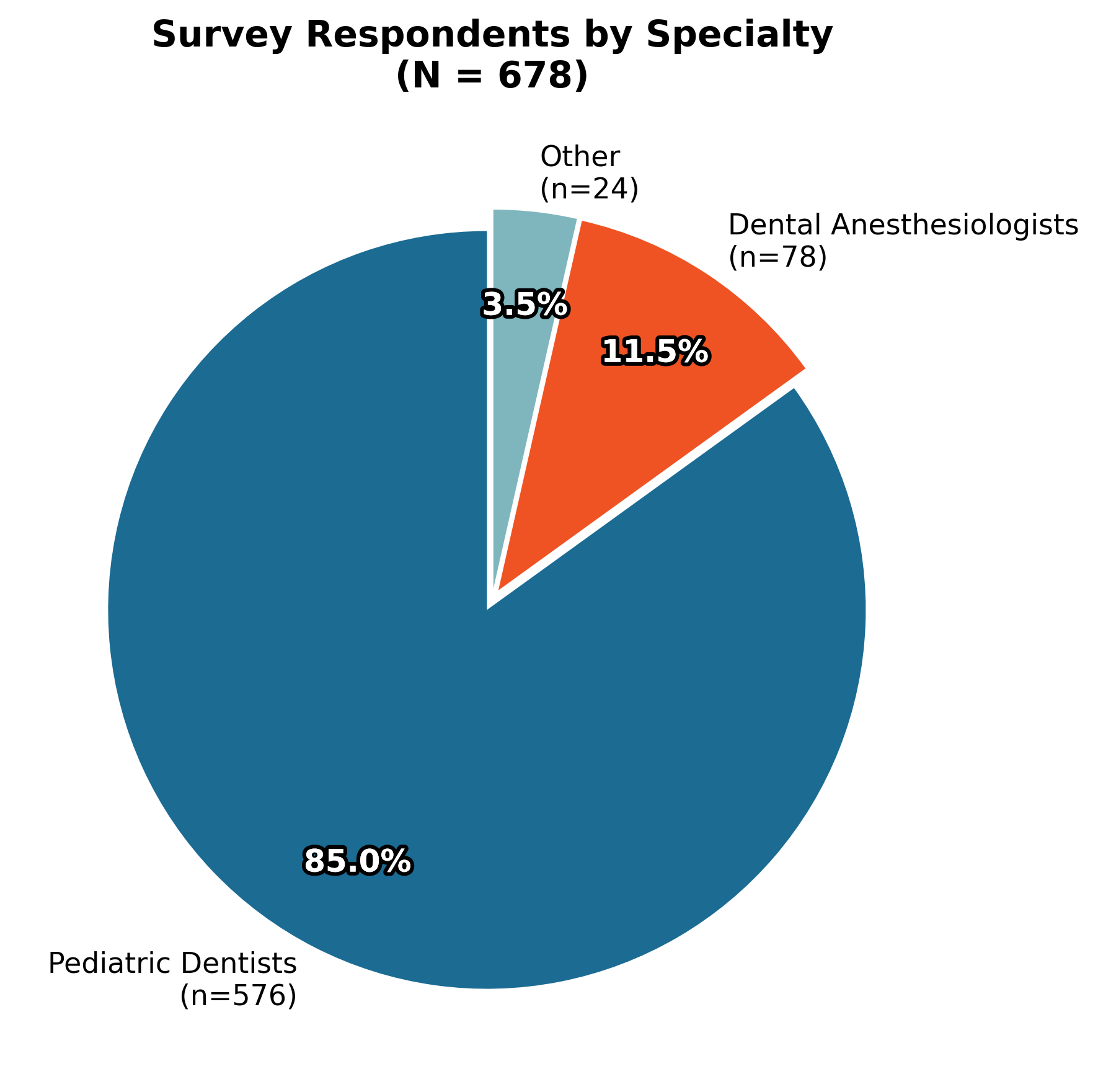
Chart 1 - Respondent Demographics. The survey captured 678 total respondents: 576 pediatric dentists (85.0%), 78 dental anesthesiologists (11.5%), and 24 other specialties (3.5%).
Section 2: Key Comparisons Between Groups
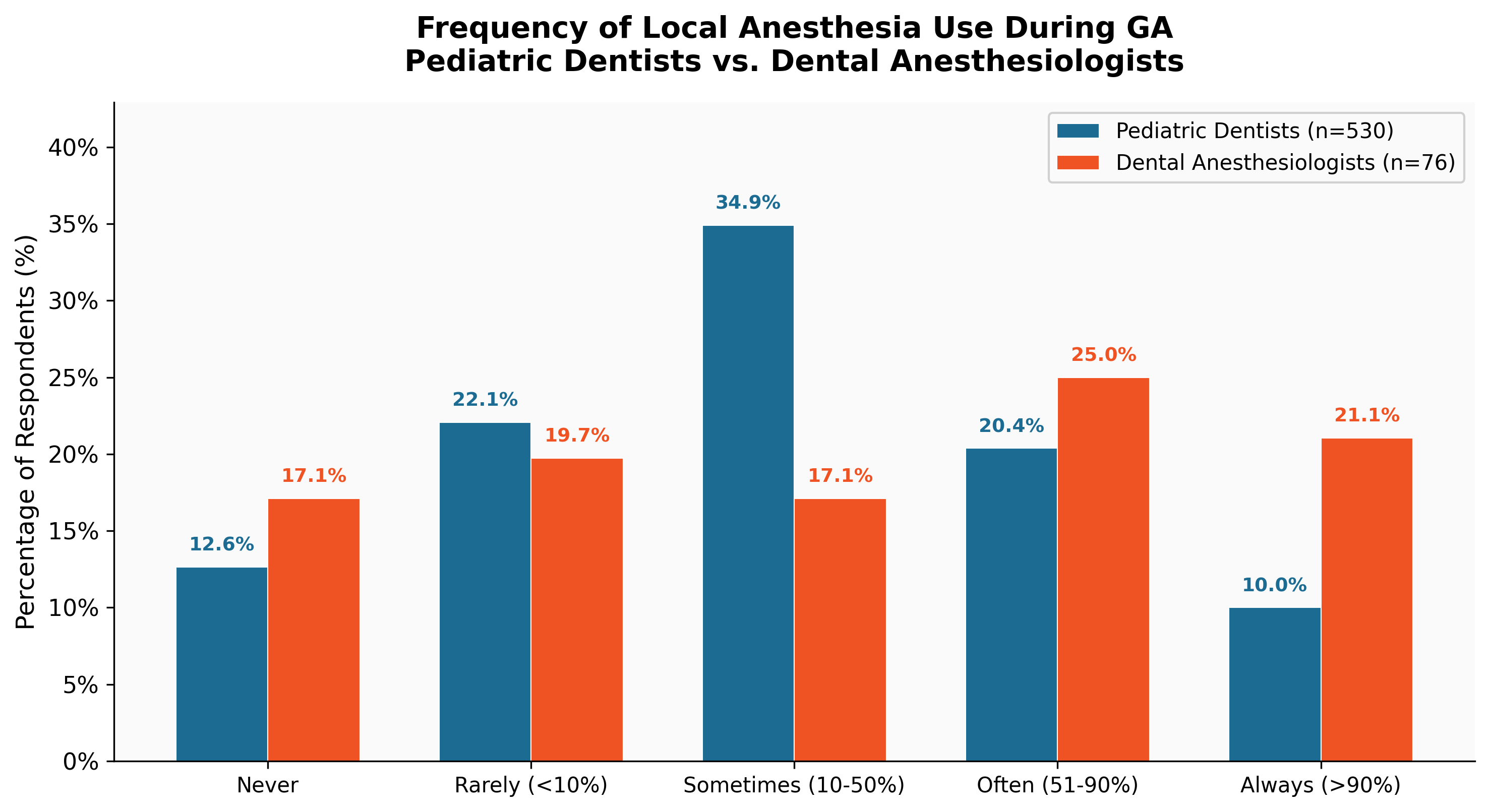
Chart 2 - Frequency of LA Use During GA. p < .001 Dental anesthesiologists use LA much more frequently than pediatric dentists. 84% of DAs use LA "Always" compared to only 18.7% of PDs. PDs are spread across all frequency categories.
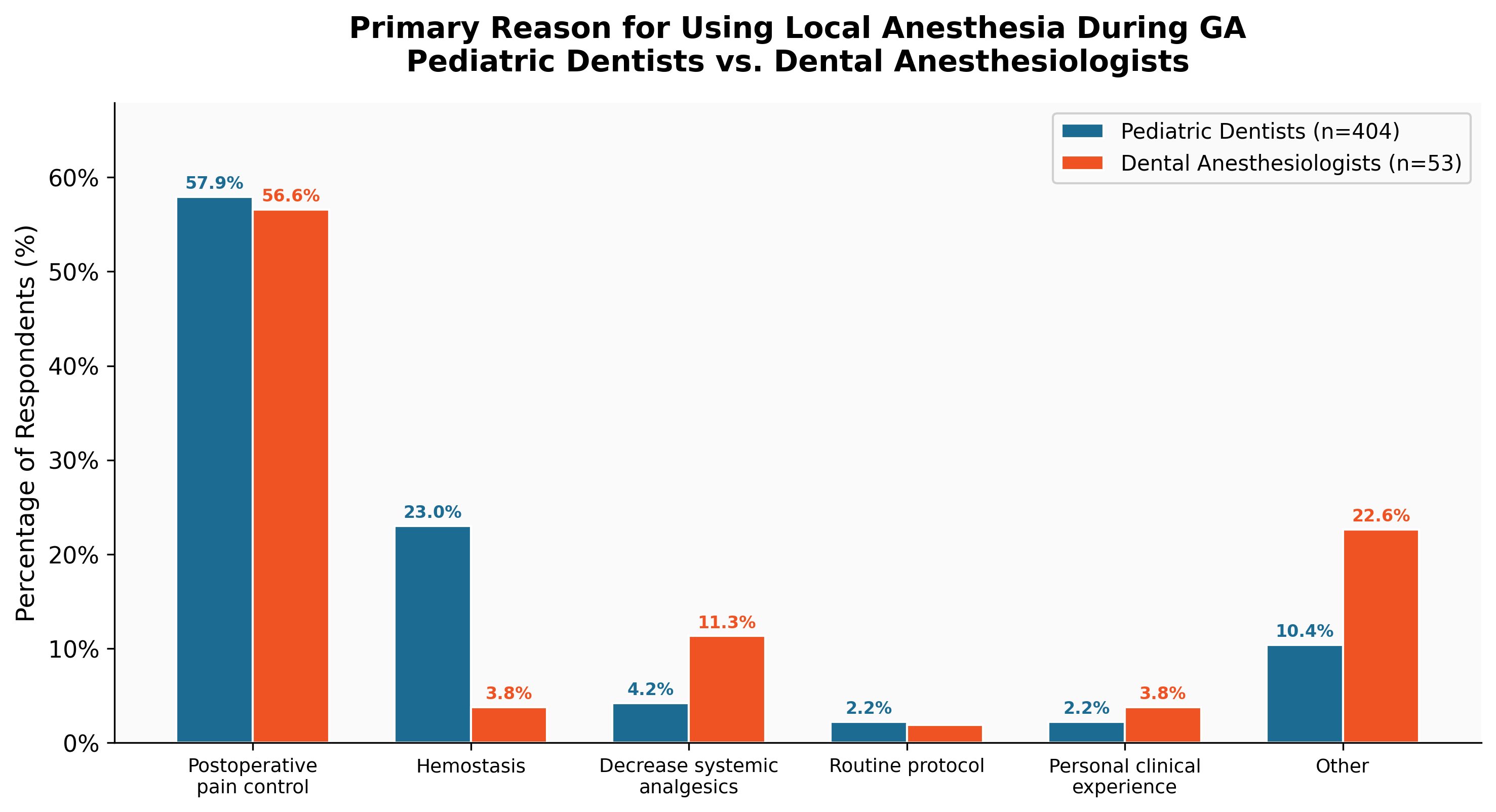
Chart 3 - Primary Reason for Using LA During GA. p < .001 Both groups cite postoperative pain control as the top reason, but they differ on secondary reasons. PDs prioritize hemostasis while DAs focus on decreasing systemic analgesic needs.
Chart 4 - Does LA Reduce Post-Op Pain? DAs are more confident in LA's pain reduction benefit (53.0% "Yes") compared to PDs (41.1%). PDs show more uncertainty (23.1% "Unsure").
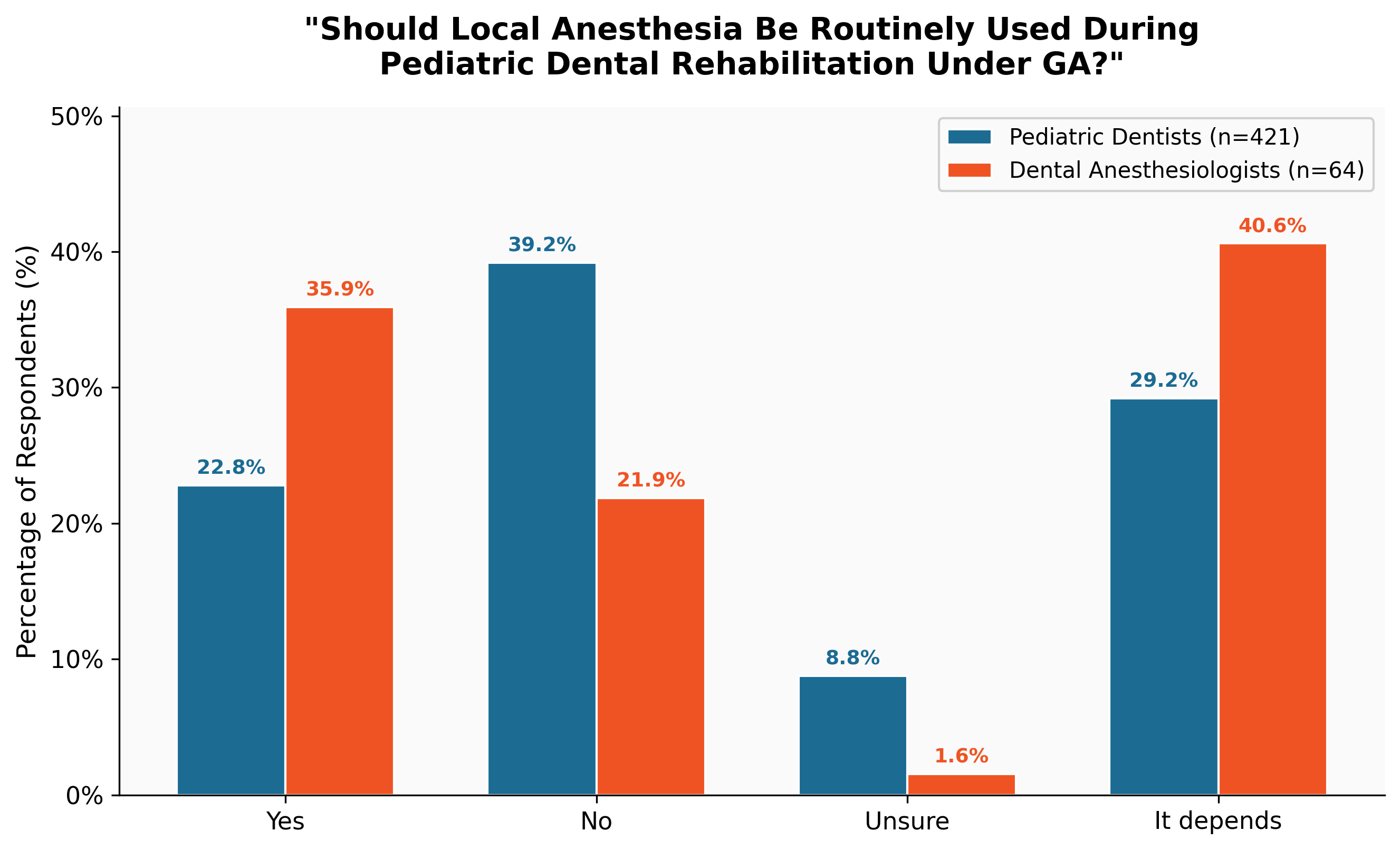
Chart 5 - Should LA Be Routine During Pediatric Dental GA? A key divergence: 39.2% of PDs say "No" vs. only 21.9% of DAs. DAs lean toward conditional support (40.6% say "It depends").
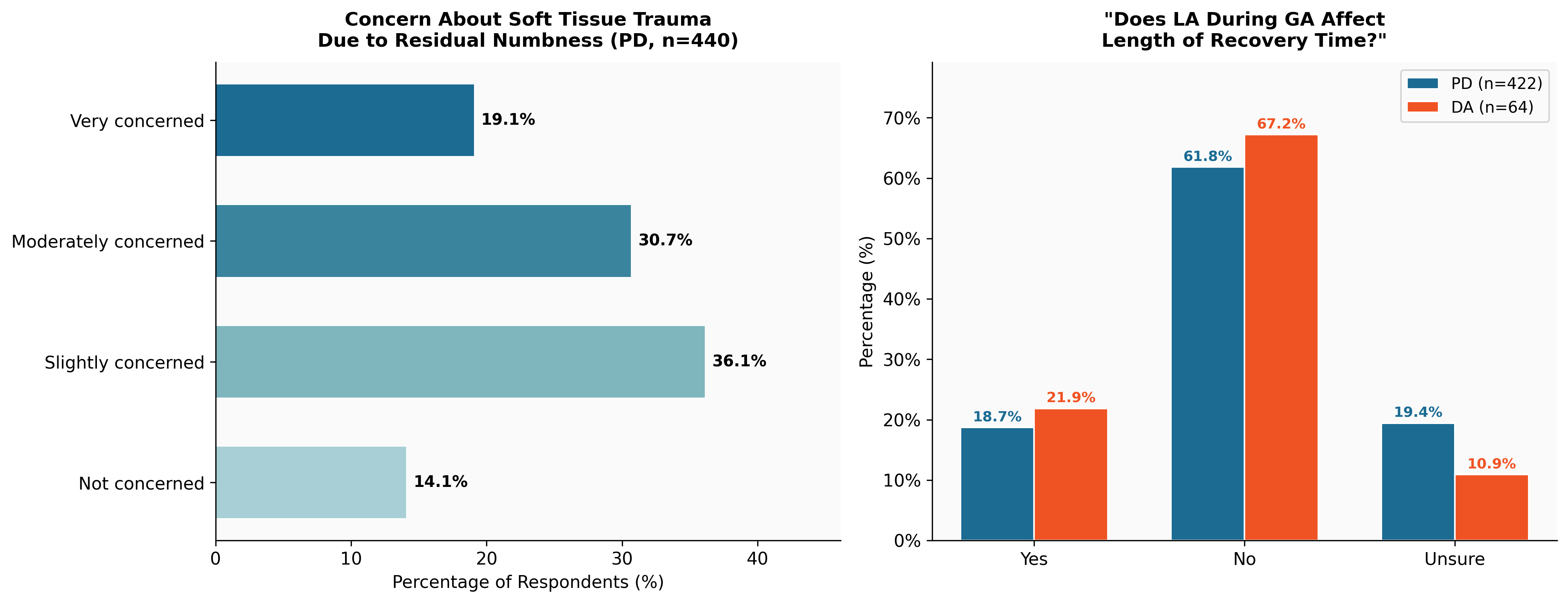
Chart 6 - Soft Tissue Concerns and Recovery Time. 85.9% of PDs express some concern about post-op soft tissue trauma. Both groups agree LA generally does not affect recovery time (~62-67% say "No").
Section 3: Statistical Analysis Results
Chart 7 - T-Test: Practice Experience. p = .007 p < .001 PDs have practiced longer on average (19.1 vs. 14.3 years), but DAs perform far more GA cases per month (46.8 vs. 9.4). DAs have substantially more GA-specific experience.
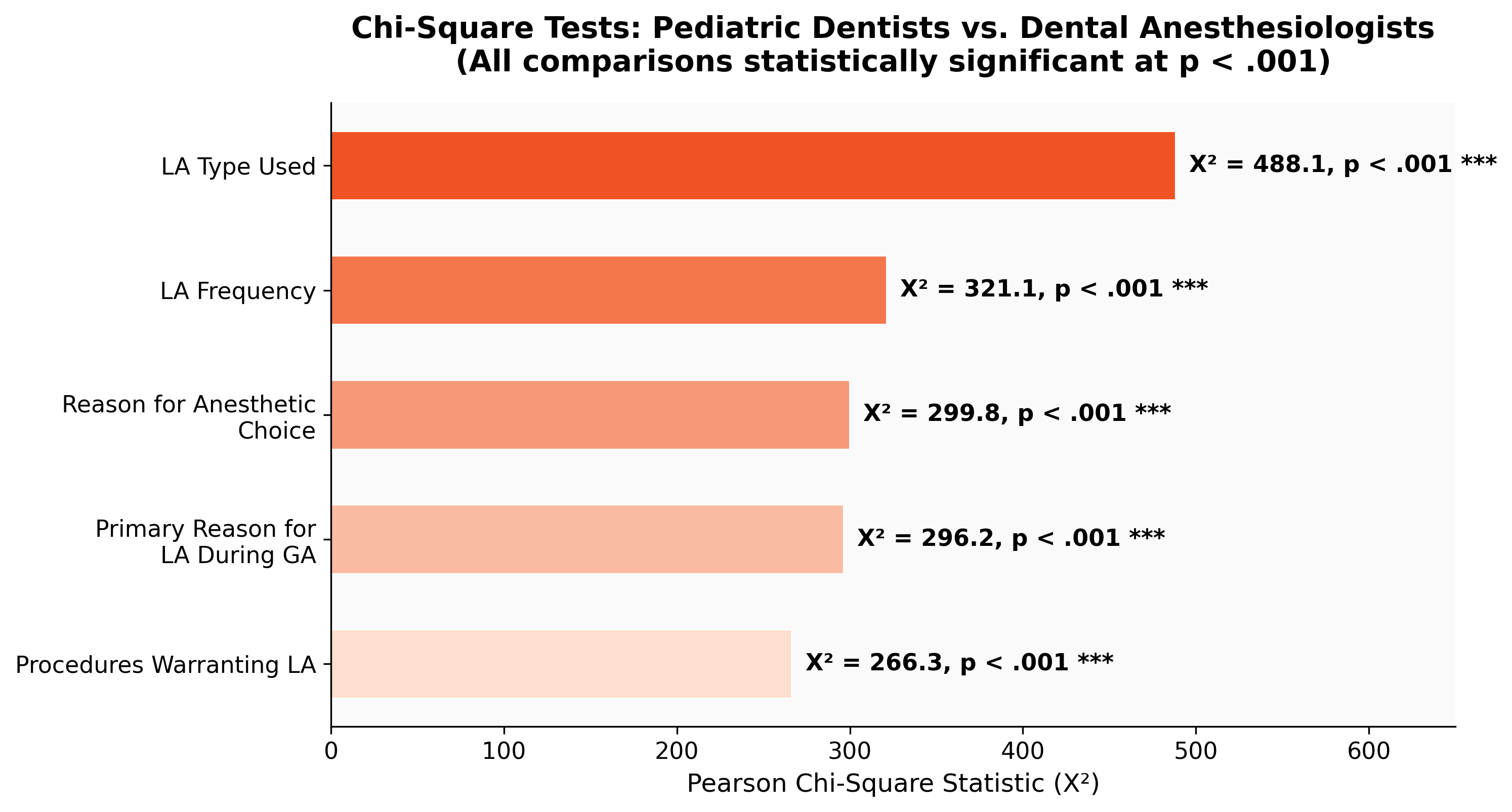
Chart 8 - Chi-Square Tests Summary. All p < .001 All five key comparisons between PDs and DAs were highly statistically significant. The largest difference was in LA type used (X²=488.1), confirming fundamentally different practices between the two specialties.
Chart 9 - Mann-Whitney U Test: Factors Influencing LA Use. Three factors showed significant differences. DAs rank "collaboration with anesthesiologist" much higher (p=.002), while PDs rank "patient preference" (p=.001) and "family preference" (p=.044) higher. The remaining 8 factors showed no significant difference between groups.
Section 4: Practice Patterns and Perspectives
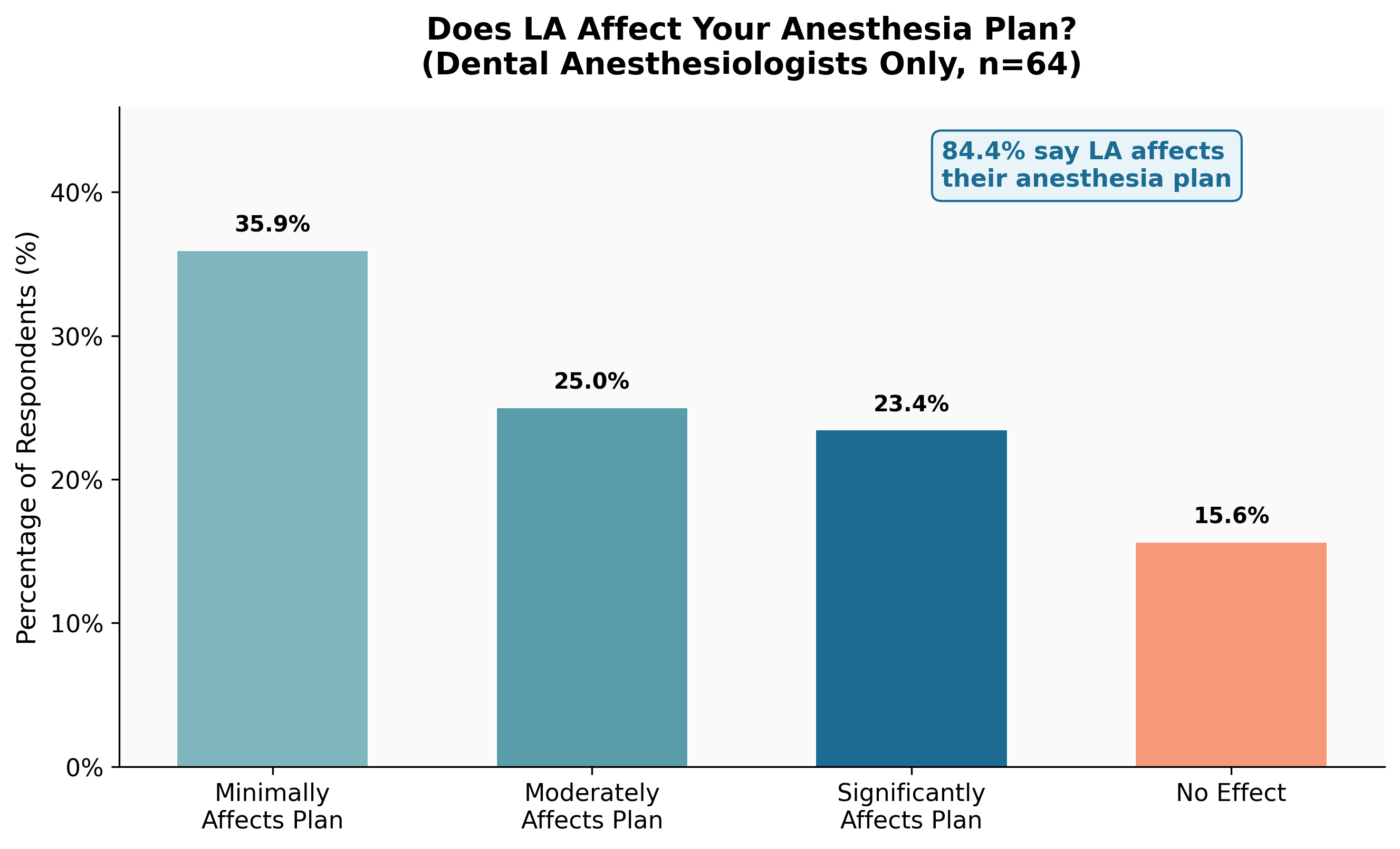
Chart 10 - Does LA Affect the Anesthesia Plan? (DAs Only) 84.4% of dental anesthesiologists say the dentist's use of LA affects their anesthesia plan. This means when PDs skip LA, the anesthesiologist often needs to compensate with deeper sedation or more systemic pain medication.
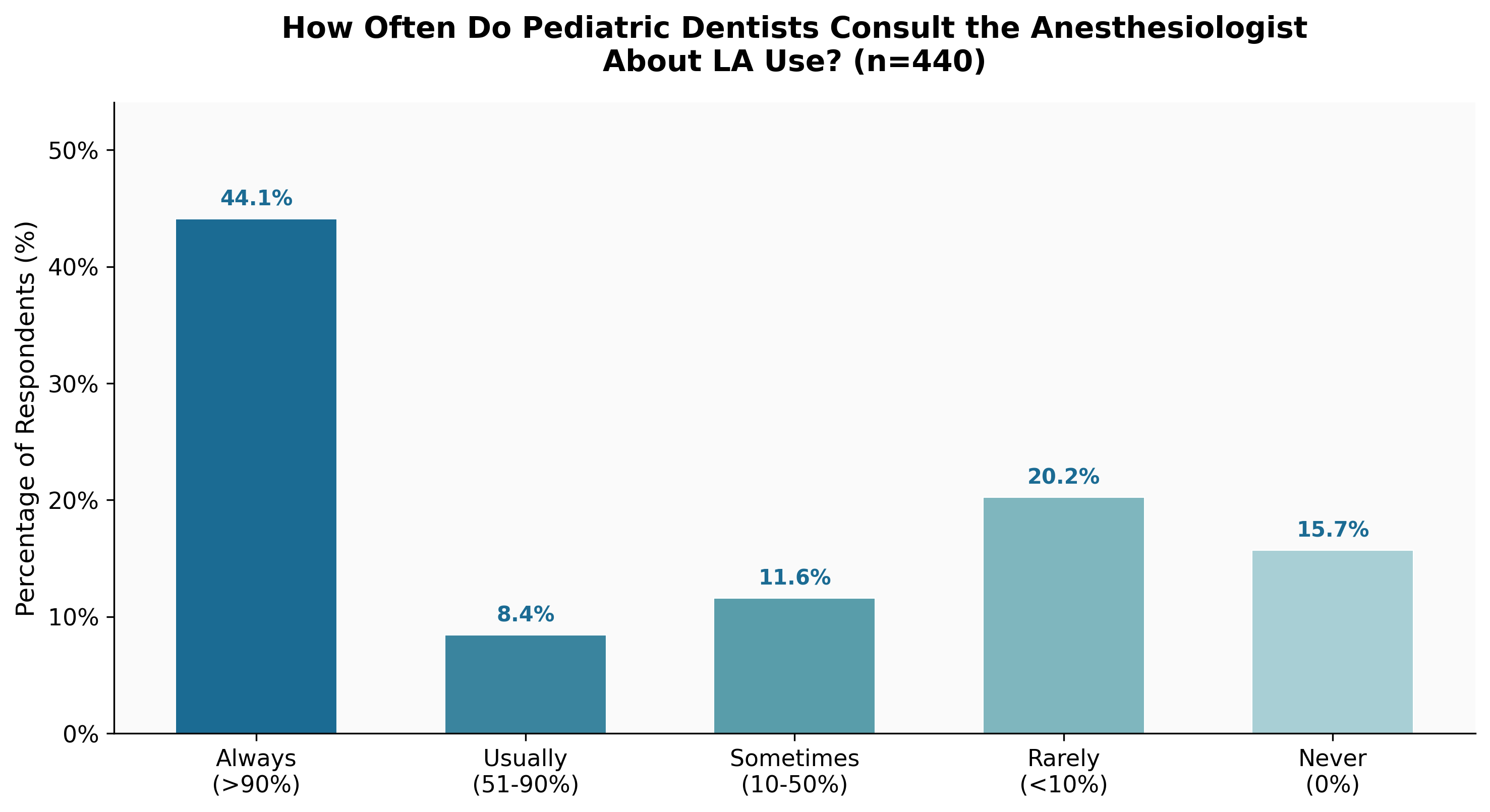
Chart 11 - How Often PDs Consult the Anesthesiologist About LA. While 44.3% always consult, 36% rarely or never do. Given that most DAs say LA affects their plan (Chart 10), this represents a potential communication gap between the two specialties.
Chart 12 - Concern About Post-Op Soft Tissue Trauma (PDs). 85.1% of pediatric dentists express some level of concern about soft tissue injury from residual numbness (e.g., lip/cheek biting). This is the primary barrier driving PDs to avoid LA during GA.
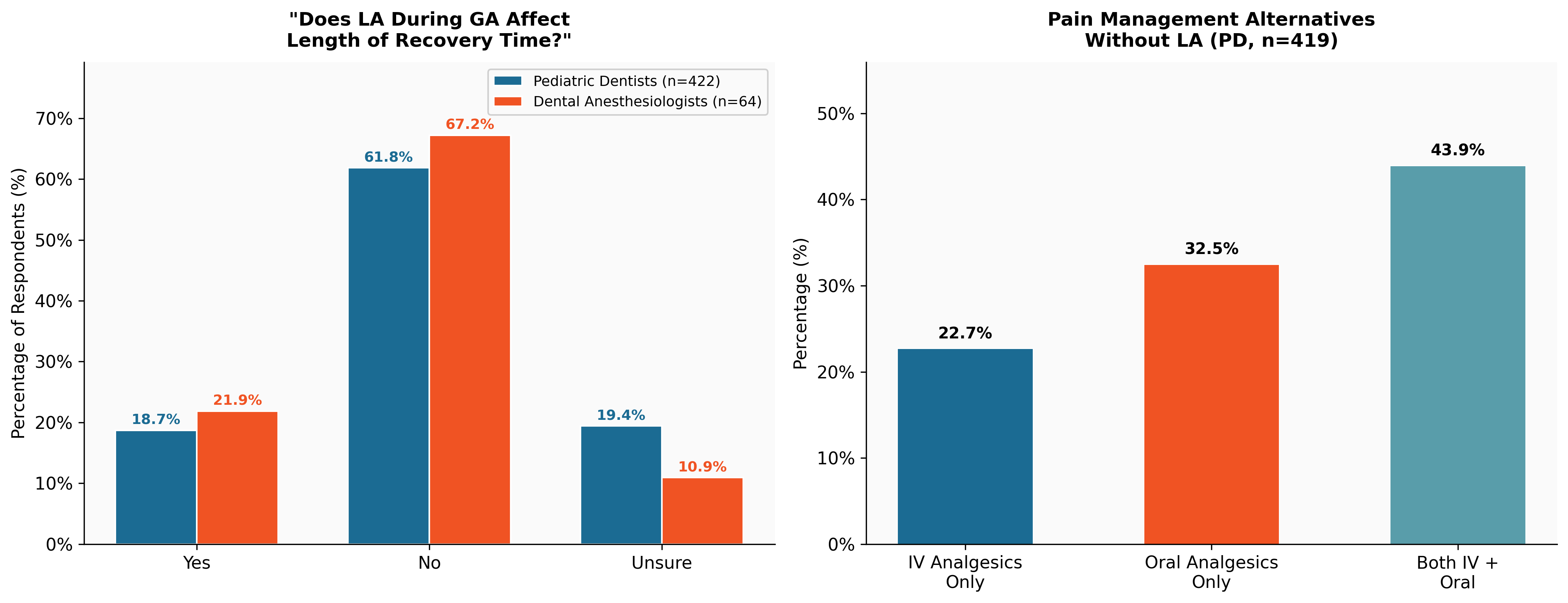
Chart 13 - Recovery Time and Pain Management Alternatives. 62.9% say LA does not affect recovery time. When LA is not used, the most common alternative is a combination of IV analgesics during the case plus oral analgesics afterward (51.7%).
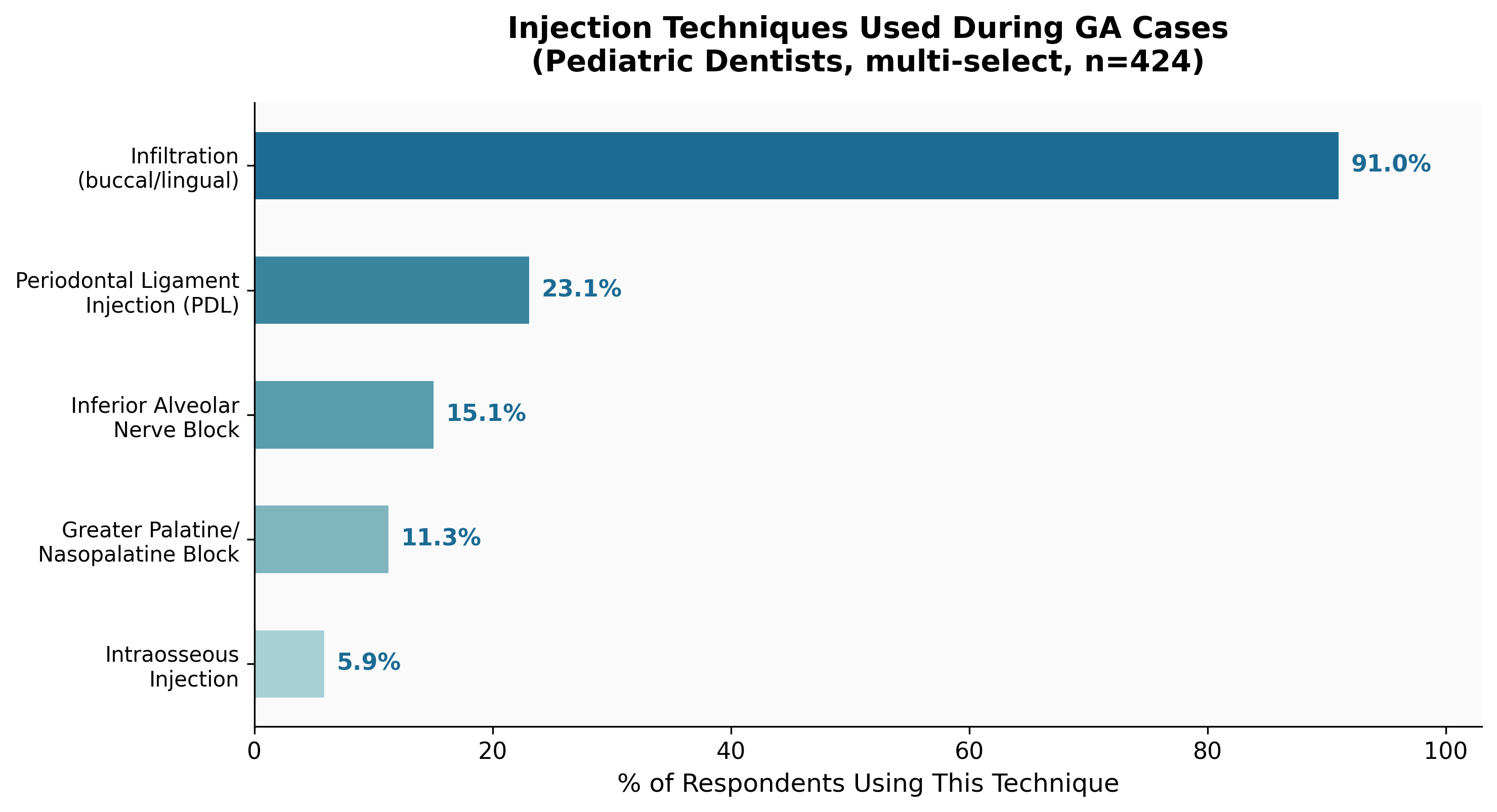
Chart 14 - Injection Techniques Used During GA (PDs). Infiltration is overwhelmingly preferred (89.8%), with PDL injection a distant second (24.1%). Nerve blocks are used by only 14.5%, consistent with efforts to minimize widespread numbness and reduce soft tissue injury risk.